A lot of people want to sell Notion templates because they have seen other creators do it.
The problem is they often build the wrong kind of template.
They make something aesthetic, but not actually useful.
If you want Notion templates that can actually sell, build around real creator friction:
- planning content
- tracking partnerships
- managing digital products
- organizing ideas
- reducing mental overload
That is what buyers pay for.
And yes, the market is real. Notion’s own template marketplace makes it obvious there is a huge ecosystem around templates and creator profiles. But “there is demand” is not enough. You still need a better idea than another generic life dashboard.
What makes a Notion template sellable?
A template becomes easier to sell when it does one of these well:
- saves time
- reduces confusion
- gives structure to repeated work
- helps people stay consistent
- makes progress easier to see
In other words, sell relief, not just organization.
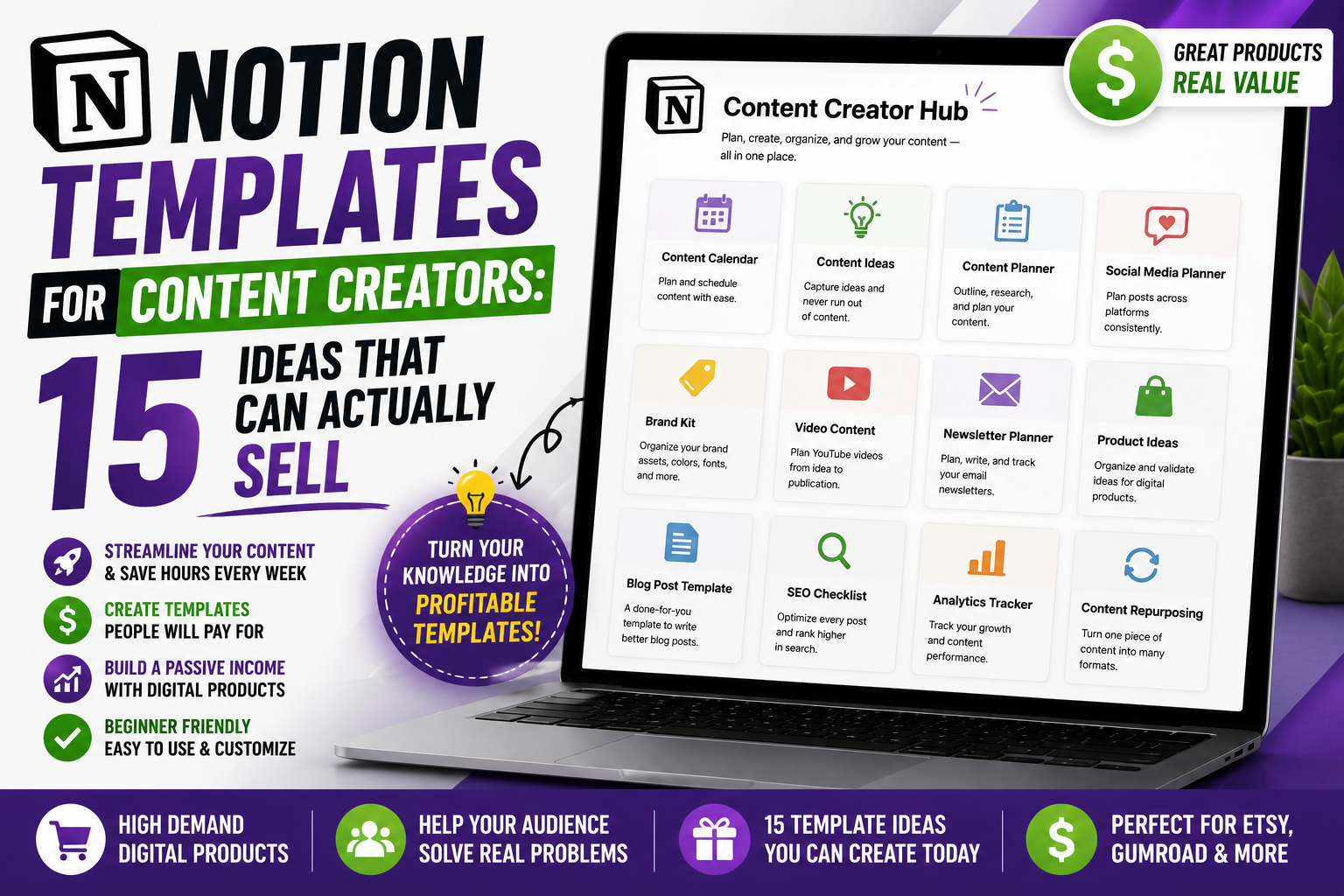
15 Notion template ideas for content creators
1. Content calendar dashboard
This is the obvious one, but it still works when it is done well.
What makes it better:
- content status stages
- platform tagging
- deadlines
- repurposing notes
2. YouTube planning hub
Great for creators who publish video and need a place for:
- ideas
- titles
- thumbnails
- script stages
- upload checklist
3. Brand partnership CRM
This one is practical and monetization-focused.
Track:
- outreach
- follow-up dates
- rates
- deliverables
- payment status
4. UGC creator client tracker
Perfect for creators working with multiple small brand deals.
5. Newsletter issue planner
This helps creators organize:
- issue ideas
- subject lines
- CTAs
- links
- send dates
6. Digital product launch board
Very sellable if your audience wants to create templates, ebooks, or mini offers.
Include:
- idea validation
- copy tasks
- launch assets
- pricing
- promo schedule
7. Content repurposing hub
This is one of my favorite template ideas because it solves a real problem.
One content asset goes in, and the system helps break it into:
- blog
- Shorts
8. Affiliate income tracker
A strong fit for bloggers and creator businesses.
9. Podcast guest tracker
Good for creators running interviews or guest appearances.
10. Solo creator weekly dashboard
This works best when it is simple and execution-focused, not bloated.
11. Audience research database
Track:
- pain points
- recurring questions
- content ideas
- product angles
12. Sponsorship pipeline
Useful for creators with monetization goals beyond ad revenue.
13. Blog post production board
A great fit for bloggers who want editorial structure.
14. Reels and Shorts planner
Short-form creators like templates that help them stay consistent.
15. Creator business OS
This is the biggest idea on the list and also the easiest to overbuild.
If you create this, make it modular. Do not turn it into a confusing monster.
Which template ideas are easiest to sell first?
If you are a beginner, I would start with one of these:
- content calendar
- repurposing hub
- YouTube planner
- digital product launch board
- affiliate income tracker
Why?
Because they are easier to explain and easier for buyers to understand quickly.
What makes buyers skip a Notion template
1. It looks pretty but feels vague
People want clarity on what the template actually helps them do.
2. It is too broad
Generic “life dashboards” are everywhere.
3. It feels overcomplicated
Buyers do not want homework.
4. The copy does not explain the use case
This matters more than many people think. The best template can still flop if the listing is unclear.
That is one place a writing tool like GravityWrite can help. It is useful for product descriptions, benefits, landing page copy, and launch emails especially if you already know the idea but struggle to package it cleanly.
How to package a template so it sells better
Do not just sell the file.
Sell the outcome.
Instead of:
Notion content dashboard
Try:
A creator planning system that helps you organize ideas, track production, and publish consistently without losing track of what is next.
That framing changes everything.
A simple offer stack that works
If you want to increase perceived value, bundle:
- main template
- quick-start guide
- setup video
- example filled-in version
That makes the product feel much more usable.
Where these templates connect to your blog
These template ideas pair naturally with FinanceHark content around:
- digital products
- content systems
- blogging workflows
- creator monetization
That is why this topic fits your site so well. You are not writing into a random niche. You already have related posts like How to Launch a Notion Template or Planner With AI-Powered Copy and Turn Your Blog Into a Digital Product Funnel.
Final thoughts
The best Notion templates for content creators are not the ones with the fanciest layout.
They are the ones that remove friction from repeated creator work.
Build for a real use case. Explain the outcome clearly. Keep the system easy to adopt.
That is the kind of template that can actually sell.
FAQ
What Notion templates sell best for creators?
Templates that help creators plan content, manage partnerships, track products, and stay consistent usually have stronger selling potential than broad lifestyle dashboards.
Can beginners sell Notion templates?
Yes, especially if they solve a clear problem and package the template in a way that feels easy to use.
Where can I sell Notion templates?
Creators often sell them through marketplaces, personal sites, digital product platforms, and creator-driven storefronts.
How do I make my Notion template stand out?
Focus on a specific use case, clearer copy, and a simpler experience rather than trying to build the biggest dashboard possible.
FinanceHark Product
Get the full system behind clearer offers and stronger launches.
The FinanceHark Online Income System bundles the templates, scripts, prompts, and launch assets that make digital offers easier to build and sell.
- Templates, prompts, scripts, and workbook tools
- Instant access after successful payment
- Built for freelancers, creators, and digital sellers
Why this article is easier to trust
FinanceHark focuses on practical guides, transparent recommendations, and updates that make articles easier to use in the real world.
- Read how content is researched and updated in our Editorial Policy.
- See how affiliate relationships are disclosed on our Disclosure page.
- Use Start Here if you want a quicker route into the rest of the site.
Related reading